Welcome to Wordthug.com
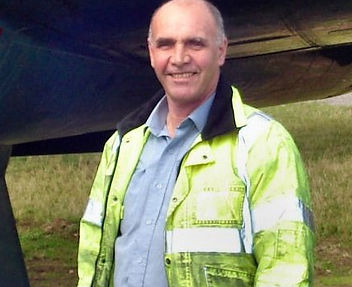
One boring Sunday morning at the turn of the century in a hot and faraway place, Steve Fitzsimmons picked up a pen and notepad and wrote a short story. He hasn't stopped writing them since then.

Author's biography
(Steve Fitzsimmons interviewed by Wordthug)
Wordthug: Apparently you're a hardcore reader?
SF: I became a book junkie as soon I was old enough to use my new-found reading skills for pleasure. My earliest hardback memories are a jumble of the Ladybird and Observer series and Winston Churchill’s My Early Life autobiography (which also taught me how to use a dictionary). The Look and Learn and National Geographic magazines were a magnet for me, as were the short stories in my mother’s Tit-Bits variety weekly. I can clearly remember some of the plots when we were snowed in during the 1962/63 Big Freeze and the only entertainment was reading and listening to a radio. Ever since then, put me anywhere, or in any situation, and I’ll never be bored as long as I’ve got words. I’ve read literally thousands of books of all genres and learned something from all of them, whether wonderful, indifferent or Not Very Good.
Wordthug: How did you get to where you are today.
SF: I left school at 15 with nothing but a big spring in my step and an even bigger grin.
English was my best subject and, other than art and metalwork, I couldn’t be bothered with anything else. I’ve forgotten everything about adverbs, auxiliary verbs, declensions, subordinating conjunctions, reflexive pronouns, present participles, relative clauses and all that grammatical mumbo-jumbo, but a driver doesn’t need to know about ignition timing, camshaft lobe profiles, fuel injection or compression ratios to pop down to the shop for a newspaper and pint of milk. I know how, but not why, the language works, which is good enough for me.
In those days, it wasn’t difficult to get a job without qualifications and I eventually ended up as a licenced aircraft engineer via several employment detours and hard self-study. So much for the school careers officer telling me I was going nowhere without O Levels. He was wrong in both meanings ... I was in Africa when I first put think to ink on that Sunday morning in 2000 and many of the subsequent stories were inspired by my life experiences from many angles.
I’ve been retired since 2021 and have a part time job at a motor sport venue to keep me active, if not rich.
Wordthug: What do you write about?
SF: Anything. I’m not tied to any particular genre or writing style. An idea can be inspired by something I’ve seen or heard, flashes of past experiences or the remnants of dreams that have disappeared into my mental recycle bin. I like to go from bathos to pathos, triumph to tragedy and levity to gravity as a contrast to whatever my last piece of writing was.
Wordthug: So why did you self-publish a book on Amazon KDP?
SF: The traditional publishing route isn’t receptive to short story collections unless they’re by a well-known writer, so KDP was my only channel to print. I’ve lost count of the submissions I’ve made to agents and most have been ignored. The one positive response I received was that they enjoyed my work but, in their experience, only themed collections were marketable. Fair enough, they’re in the business to make money. I’m a lover of short stories and, depending on the day, often prefer them to novels. If I’m travelling by air, sea or rail, they’re more likely to keep my attention focussed. A short story writer has got to work hard to condense his/her meaning into a few thousand words and if he/she hasn’t grabbed the reader in the opening page, they’ve blown it.
Wordthug: What do you think makes or breaks a story from the outset?
SF: The passive voice ruins a story as far as I'm concerned. It suggests a lack of confidence in the writing or the characters.
Wordthug: What do you mean by ‘passive voice?
SF. Passive voice = Going to the door, I put on my jacket and went into the garden.
Active voice = I put my jacket on and went into the garden.
Passive voice: Writing on the blackboard, the teacher demonstrated the formula.
Active voice: The teacher demonstrated the formula on the blackboard.
Passive voice = My car was bought by a neighbour.
Active voice = A neighbour bought my car.
It’s a subtle word order change but alters the dynamics. I might not be an expert writer but I think I can claim to be an expert reader after trawling through thousands of books over the past 60 or so years. If a story starts with the passive voice, I’ll probably stop reading. It’s easily fixed once the writer gets into the mindset. I once paid for a professional appraisal of my writing and read one of the critiquer’s short story collections while waiting for the report. I was surprised to find that he was thoroughly guilty of the passive voice as well as ‘deep’ purple prose, despite a Creative Writing qualification. No credibility, no listen, bwana!
Wordthug: What’s purple prose?
SF: Flowery writing. Writers using needlessly long sentences, elaborate words or phrases and extravagant descriptions to impress their readers rather than keeping it simple and tight.
Wordthug: Give me an example.
SF: Okay, something like this:
I wended my way through the multitudes going about their business in the tree-lined thoroughfare. Once I espied the premises of Catlick and Sprogforth, Solicitors, I ascended the steps, opened the green door and followed the plushly-carpeted passageway to a sign marked Reception. A slim young woman with curly red hair sitting behind a large computer screen enquired as to my needs. Once she had ascertained the reason for my visit, she announced my arrival to Mr Catlick through the intercom and directed me to his office.
He bade me enter upon hearing my knock on his door. I was confronted by a grey-haired man of ample proportions clad in an expensive blue pin-striped suit, pink shirt and vermilion tie reclining on a luxurious leather chair behind a vast oak desk.
He rose and greeted me with a firm shake of the hand. ‘Ah, Mr Pylock! How can I be of service to you?’
It could be condensed into something like this and lose nothing in translation:
I pushed my way through the lunchtime crowds and found the office of Catlick & Sprogforth, Solicitors. The secretary took my details, called Catlick on the interphone and pointed me to his office. I knocked on the door and went in.
‘Good day, Mr Pylock. What can I do for you?’ The accent matched his Savile Row suit.
Wordthug: Just as well you don’t get paid by the wordcount. Which writers do you admire?
SF: For short stories and full-length books: Roald Dahl and Ernest Hemingway (both with some reservations), Ambrose Bierce, Basil Copper, Len Deighton, Alistair MacClean, Gerald Hanley, JP Mallalieu, Frederick Forsyth, Nicholas Monsarrat, Raymond Chandler, Joseph Heller, Joseph Conrad, Ernest K Gann, Charles Dickens, Jack London, George Orwell and Aldous Huxley. I imagine many younger readers have never heard of most of them.
Wordthug: I haven’t either. What are your favourite short stories?
SF: The first ones that come to mind are Ambrose Bierce’s An Occurrence at Owl Creek, Basil Copper’s Camera Obscura, Jack London’s To Build a Fire, Shirley Jackson’s The Lottery and W Jacobs’ The Monkey’s Paw.
Wordthug: So, what’s your publishing history?
SF: I had two 30,000-word collections published in chapbook form by a small publisher in 2003 (Quick Shorts for Fast Travellers and Science Quicktion). I made the usual novice mistakes and when they went out of print, I recycled most of them into improved versions. I’ve had an article on 100 Years of Powered flight published in Air Botswana’s inflight magazine and several inclusions in various anthologies. Here and There, This and That is a 60,000-word collection published by Amazon and I’m presently editing another short story collection for release in 2026. I’m also 30,000 words into a novel called A Sieve for a Sky, which is getting a bit dusty at the moment.
I reckon that’ll do for the moment. How about a beer break?
Wordthug: Well, if you’re buying! It is more blessed to give than receive (according to the bible anyway).
He's off the grog shop so I'll add a few of his reviews ...
This book has a front and back cover with words inside. Beccles Enquirer.
***
Every picture tells a story, which is more than this writer can. The Pucklechurch Proclaimer.
***
To think that a tree in the Amazon Rain Forest died for this. The 2025 Forestry Commission Literary Review.
***
This collection leaves me speechless … Grimsby Trawler Crew Leisure Time Monthly.
***
This author certainly knows how to write. Unfortunately he doesn’t know when to stop. Shropshire Short Story Society.
***
I thoroughly recommend that the author concentrates on mystery. It does him no favours to reveal his identity. Association of British Fiction Writers.
***
On the other hand ...
Michelle Emerson
https://michelleemerson.co.uk/about-2/
Helping first-time authors to self-publish novels and ebooks with confidence.Helping first-time authors to self-publish novels and ebooks with confidence.
Visible to anyone on or off LinkedIn.
2024 Author Showcase:
'Here and There, This and That' by Steve Fitzsimmons was published in November 2024.
Writing short stories requires a certain type of skill and I'm pleased to say that Steve has honed his perfectly. This book was a real treat to work on and if you love short stories, I can highly recommend it.
Readers' Favorites
Review of Here and There, This and That by Steve Fitzsimmons.
Review Rating by Bernadette Longu
5 Stars.
Congratulations on your 5-star review!
Here and There, This and That by Steve Fitzsimmons is a book of short stories from all over the world. Stories from Rhodesia, now Zimbabwe. A Government Officer of the Prisons, a hangman, and how he feels about his job, especially now that he is haunted by his last client. How Mr Valentine Merryweather got his nosey neighbour to stop playing his music so loud. How quickly people forget the elderly, especially if they cannot look after themselves anymore, but how they can turn the tables on those who forget them. A junior journalist gets his first real break to write a story with a byline, but does not do research like he should, and leaves out the most important information on the deceased. The old soldier in India who adopts a young orphan boy. These are but a small sample of the 30 stories available to the reader. Each story is unique in its own right, each with its own message for the reader.
In Here and There, This and That by Steve Fitzsimmons, each story has been chosen for its message and revelation to the reader. Some are far-fetched, those that are near impossible to believe, but leave a lasting impression. Each story will have the reader going back to read it again, and then choose the ones they like the best. As the reader goes through each story, there will be tears for those lost, laughter at some of the antics the characters get up to, and anger at those who take advantage of the impressionable and innocent. This book is well worth a slow read to allow the reader to savor and understand each story on its own merits. It is a very interesting collection.

Here's one of his stories from the Here and There, This and That collection.
It was originally written around 2005, appeared online a couple of times, and
published in the 2012 Glasgow Subway ClockWorks Anthology.
The Final Sentence
Cliff tapped my arm as Elvis Presley faded away. ‘Do you want to hear something very interesting?’
The jukebox began pounding out the latest Eurovision Song Contest winning entry as he finished speaking. I thought for a few seconds. ‘Waterloo. It’s a damn sight better than the usual dross that gets the votes.’
‘You can say that again!’ he said. ‘The blonde’s a real dish as well but I wasn’t thinking about ABBA. I’ve got something that’ll open your eyes even wider.’
This was unusual. Cliff wasn’t one for gossiping. ‘I’m listening,’ I said.
‘See old Derick over there?’
Derick was sitting in his usual place in an alcove at the end of the bar that was just large enough for its two chairs and circular table. He was drinking his customary pint of mild and bitter and there was a pipe and empty spirit glass on the table. He was alone. Everyone in the village knew there was no profit to be had in talking to him.
‘Ah, the man who makes a Trappist monk sound like a chatterbox.’
Cliff chuckled. ‘True. Anyway, what do you suppose he used to be?’
I looked at the tight-lipped, black-suited old man again. He wasn’t much more than five and a half feet tall and slim with it. His face – and nose in particular – was red, contradicting his snow-white hair, and I guessed his age at somewhere around seventy-five. He was staring at something well out of anyone else’s view because there was nothing to look at behind that end of the bar other than packets of peanuts clipped onto cardboard backgrounds of semi-naked women.
‘Huh, he could be anything,’ I said. ‘If you told me he’d been a road sweeper or a politician, I wouldn’t be surprised.’
‘Well, that was a pretty good guess. Actually, he was the middleman of the two.’
‘Eh? I’m not with you.’
‘Like I said, he was the middleman – he did the government’s cleaning up.’ He glanced at the alcove again. Derick was busy filling his pipe. Cliff looked back at me and winked. Then he put a hand around his throat, made a dreadful choking sound, jerked his head to one side and closed his eyes. ‘Now guess!’
‘Christ Almighty.’ It was as if something had sucked all the warmth from my body for a moment. A match flared as Derick lit his tobacco and a surge of horror ran through me at the thought of those same fingers slipping the noose over the heads of condemned prisoners before pulling the trap lever that sent them on their short journey to the next world.
Cliff grinned. He was clearly enjoying the effect of his exposé. ‘Yes, Frederick Hardisty himself!’
I must have looked as puzzled as I felt.
‘He’s known as Derick around here to protect his anonymity,’ he continued, ‘otherwise there’d be ghouls flocking from all over if it was public knowledge.’
Of course! Now I remembered reading somewhere that a Frederick Hardisty had despatched several hundred murderers, traitors, Nazi spies and war criminals during a thirty-year career of culling. And now here he was, living in the Derbyshire village of Alsover, population 1,116.
I looked over again. Derick was pouring what was left in the mild ale bottle into his glass. ‘He always gives me the impression he’s afraid of being pounced on, like a rabbit hiding from a fox.’
‘Well, I suppose he was the fox at one time.’ He finished his drink. ‘Another one?’
There was now a horrible fascination about Derick. I looked over again as Cliff went to the bar. Public Executioner … what a way to earn a living! I tried to imagine coming home from work.
‘Hello, dear. Sit yourself down and I’ll fetch you a bottle of stout. There’s a nice bit of mutton for your tea and some bread pudding for afters. Did you have a good day?’
‘Oh, not too bad, I only had one customer. He made a bit of a scene but I soon quietened him down. Have you seen my slippers?’
By some sixth sense, which he must have sharpened since he began his grisly trade, Derick looked up at me. I hastily switched to watching the barmaid as she collected glasses but he knew exactly who I'd been staring at.
Cliff returned with the drinks and put on his Groucho Marx voice. ‘I once asked a hangman if he liked his job and he told me it was money for old rope.’
I couldn’t help laughing at his tasteless joke despite my revulsion at finding out a state-sponsored killer was sitting less than a bus-length away. But when I dared look at the alcove again, Derick was gone. His unfinished drink stood on the table. He never returned.
I wondered if my stare had anything to do with his departure.
***
Derick died about three months later. The Times and Guardian ran dry obituaries and the Sun, Daily Mirror and News of the World reported his death in their usual sensational manner. He was a widower and, if he had any relatives, they never turned up for the funeral. Perhaps they didn’t want the association of having an executioner in the family plastered all over the media. After the service, The Welcome Inn opened at mid-day for a quiet wake. The lounge bar was going to be a different place from now on although I noticed no one was bold enough to sit in Derick’s regular place yet. Reminiscences started to flow with the beer but there were few anecdotes because no one in Alsover could say they knew anything of the real Frederick Hardisty. It seemed he was as distant to us as was the era in which he was employed.
But there was an exception. He was sitting quietly at a window table with a whisky. The landlord was doing his social rounds and asked if he was in Alsover for the funeral or just passing through. Yes, he said, he was here for the funeral and introduced himself as an old friend of Fred’s. That got everybody’s interest. He spoke with a strong Lancashire accent and, like Derick, was red-faced and well past seventy. He finished his drink and went to the bar for another. While he was there, someone asked him how old Derick had been when he became a state hangman. That started off a torrent of queries from just about everybody, but not one answer revealed anything of the executioner’s personal life. That is, until he’d drunk his fourth or fifth double. Somebody mentioned Derick’s standoffishness and peculiar faraway looks. He signalled for another drink and faced the man who’d made the comment.
‘Well, he wasn’t aloof, I’ll tell you straight. There was a good reason for him being that way, and I’ll defy any man to behave otherwise in the circumstances.’
This was getting even more interesting. The crowd gathered closer, eager for titbits, afraid of missing a word. A whisky appeared at his elbow, then another and another.
‘You folks remember the Shay murders?’
There was a rumble of confirmation. I recalled reading about the case when I was at university in 1962. The army deserter had broken into a Bedworth house in the middle of the night, battered the owner with a hammer and raped both his wife and teenage daughter. The asthmatic girl suffocated under a gag and the man died in hospital a few days later. Shay was arrested shortly after and charged with the killings as well as rape and armed robbery. Murder was still relatively uncommon in those days and the country was shocked. He was found guilty and sentenced to be hanged.
‘Fred got the job and travelled to Winson Green the day before the execution. He worked out the drop from the weight table, set up his equipment and went to take a look at the prisoner through the peephole in the cell door. Well, this Shay, he looked up at the same time, almost as if he knew he was being inspected. His eyes locked onto Fred’s; he said the sheer malice in that stare burned right through him.’
He took a healthy swallow of whisky, filled his pipe, lit it and continued. He knew he had his audience.
‘Anyhow, Fred got up nice and early the next day, looked over his equipment again, had some breakfast and sat in with the governor until ten to eight. When he got back downstairs, Shay was screaming and lashing out at the priest and warders.
‘Fred’s had all this before so he wasn’t too bothered, but it’s unpleasant and unsettling for the others, like. The room with the scaffold is right next to the condemned cell so it’s just a case of opening the doors, pinioning the prisoner and dragging him in. It doesn’t take long – two men who know what they’re doing can have a prisoner dangling on the end of a rope within fifteen seconds. Some say that Albert Pierrepoint once managed it in eight.
‘So, the two warders have got hold of Shay while his hands are fastened behind his back with a strap. As soon as that’s done, he’s frog-marched to the scaffold, spitting and kicking. Then his legs are fastened with another strap and Fred pulls the hood over his head, followed by the noose. Just as Fred’s slipped the locking pin and about to pull the trap lever, Shay shouts out: “Ye bastarrds, Ah’m gaein’ tae fecking-well get ye, just see if Ah don’t.”
‘Fred’s heard all that before too, so he steps back, pulls the lever and down goes Shay in mid-curse. Slap on the stroke of eight, it was. That’s fifteen quid in his pocket and another piece of human rubbish gone. Fred’s about to go under the scaffold drop with the doctor and the governor to confirm the death and all that. As he’s walking past the condemned cell, he hears a voice. It’s not much more than a croak and it says, in a Glaswegian accent: “Ah’ll be waiting fir ye, ye bastarrds.“
‘Fred looks around. There’s Shay, sitting back on his bed in the cell. “Aye, Ah’ll be waiting fir all of ye,” says the voice again and then Shay disappears.
‘The governor and the doc haven’t heard any of this so they go down the trap and inspect the body. Shay’s dead, of course, Fred had done his usual good job. But he was never the same after that. He did two more executions and resigned.’
A truck rattled past the window, breaking the stunned silence.
‘Jee-sus!’ said the man who’d brought it up.
‘So that’s why poor Fred was like that … he had an appointment to look forward to that he couldn’t avoid.’ He downed his drink in one swallow and reached out for another.
‘When did he tell you this?’ I heard myself asking.
He held his whisky up to the light for a second or two before despatching it as quickly as he had the others. His eyes were starting to glaze.
‘He didn’t,’ he said eventually. ‘I was the assistant. I was right beside him.’
Absurditties
There once was a boxer from Leith,
Who tattooed his name on his teeth,
The top set read Dougal,
But the lower was frugal,
In fact, exceedingly brief.
***
Here reposes Daffyd Jones,
Once a Master Blaster,
He used to run a Rhondda mine,
Till the fuses ran much faster.
***
Below this stone, a sailor lies,
His body relinquished by the deep,
God gave him legs to walk the earth,
But not to use when fast asleep.
***
I climbed the peak at Kirkstone Pass,
And drank some warming liquor,
The journey down, I will allow,
Was much, much, much, much quicker.
***
Uncle Joe, oh what a laugh,
Always wore his Chelsea scarf,
He did it once at Millwall's ground,
The surgeon hopes he'll come around …
***
Two Frenchmen, un Stanne et un Danne,
Drove their Ford Transits to Cannes,
After un peu Muscadet,
They went the wrong way,
And ended up sleeping in Vannes.
***
I had a friend, a lollipop,
For six years he was frozen,
'Many are cold,' I said to him,
'But only few are chosen.'
***
Here lies Banquo, cruelly slain,
By order of a villainous thane,
Although he's dead, he's not forgot,
MacBeth bought Shakespeare,
A luxury yacht.
***
Based on a true story in which a woman slept with skulls:
I couldn't find a boyfriend,
No matter what I did,
Until I found a coffin,
And opened up the lid.
There he was, my perfect man!
So slim - all skin and bone,
After all these years spent waiting,
For a guy to call my own.
I made my plans to marry him,
For better and for worse,
Then took him home in a Tesco bag,
Because I couldn't find a hearse.
I cleaned him up with household bleach,
And laid him in my bed,
(Where his *thing* no longer was,
I put a bone instead.)
But my happiness was not to last,
Thanks to next door's Spitz,
It got in through an open door,
And chewed my love to bits.
So my honeymoon was over,
And the memories of my groom,
Are some toenails and a finger,
That I swept up with a broom.
***
Evolution ...
"I'm tired of being an amoeba,"
Said Fred,
"Locked inside a single cell,
I might as well be dead."
"Patience!" said the Creator,
"This evolution takes time,
You've got no need for limbs or wings,
To move around in slime."
"I'm tired of being a hydra,"
Said Fred,
"I want to move around on land,
And build myself some cred."
"I told you, not a million years ago,"
Said the Creator with a sigh,
"You cannot rush this process,
"No matter how you try."
"I'm tired of being a trilobite,"
Said Fred,
"Can't I have some sets of legs,
And be a milliped?"
"Very well," the Creator said,
Though his tone was rather curt,
"I've been planning to extend the range,
So another one won't hurt."
"I'm tired of being an arthropod,"
Said Fred,
"Can't I be a dinosaur,
And rule the Earth instead?"
"You, young Fred," the Creator said,
Looking very stern,
"Should really stop complaining,
"And wait your flipping turn."
"I'm tired of being a stegosaur,"
Said Fred,
"I'd sooner be an anthropoid,
Than a clumsy quadruped."
"I've had enough," the Creator cried,
His meaning was quite succinct,
Ambitious Fred had pushed his luck,
And of this was soon extinct.
***
Patrick tried to milk a cow,
By sucking on its teat,
He coughed and spat for half an hour,
But the bull sure had a treat.
***
Mary had a little lamb,
Its fleece was green and white,
The colour, it was noted,
Was really not quite right.
"I think I need a word with you,"
Said the ram unto his wife,
"Just a simple explanation,
About this form of life."
"That hue, perhaps, is rather odd,
I'm sure that you'll agree,
It's neither caused by advanced mould,
Nor a type of verdigris."
"That's not the only thing that's wrong,
Its mouth is somewhat wide,
The head is almost flattened,
And I'm puzzled by its stride."
"The rearmost legs seem awfully long,
Its baaa is more a croak,
Either you have been unfaithful,
Or this is someone's joke."
"I think I'll be so bold to say,
The offspring can't be mine,
Half the thing's amphibian,
And the other half's ovine."
"The evidence is rather clear,
About your night of passion,
You chose to go behind my back,
And do it froggy-fashion."
Confronted thus, the ewe cried out,
Before he made to thump her,
"I planned it as your birthday gift -
A coloured woolly jumper."
***
‘Twas the night before Christmas,
The kids were fast asleep,
But down below, Mum and Dad,
Were lying in a heap.
Bottles, cans and Rizlas,
Were scattered on the floors,
The air was thick with ganja,
And deep contented snores.
Outside, the snow fell gently,
Then the pair began to stir,
For they had better resins,
Than frankincense and myrrh.
They had a toast to Santa,
With a Carlsberg Special Brew,
Followed by an Alco-pop,
And a snort of Superglue.
Then Xmas Eve was Xmas Day,
And the kids flew down the stairs,
Bursting with excitement,
To see what would be theirs.
Tyson got an ounce of skunk,
And a magnum of Chianti,
While Kaycee got a stainless bong,
And a bag of Shiva Shanti.
So Christmas Day moved into night,
In a happy disarray,
Then ( just like St Stephen),
They got stoned on Boxing Day.